Travel to Jordan
Day 4 Wadi Mujib - Salt beach - Al Karak - Wadi Musa (240 Km.)
(25 km. away) Wadi Mujib: The Wadi Mujib Canyon, known as the Grand Canyon of Jordan, is a dazzling gorge that cuts through the mountainous landscape east of the Dead Sea. This canyon, part of the Mujib Biosphere Reserve, is one of the lowest points on earth, situated 410 metres below sea level. With rock walls rising up to 500 metres high, Wadi Mujib offers dramatic scenery and rich biodiversity. Its multi-coloured rock formations, waterfalls and natural pools create a spectacular setting that attracts adventurers and nature lovers alike. The canyon is also home to a variety of flora and fauna, including endemic and rare species, making it an important ecological haven in Jordan.
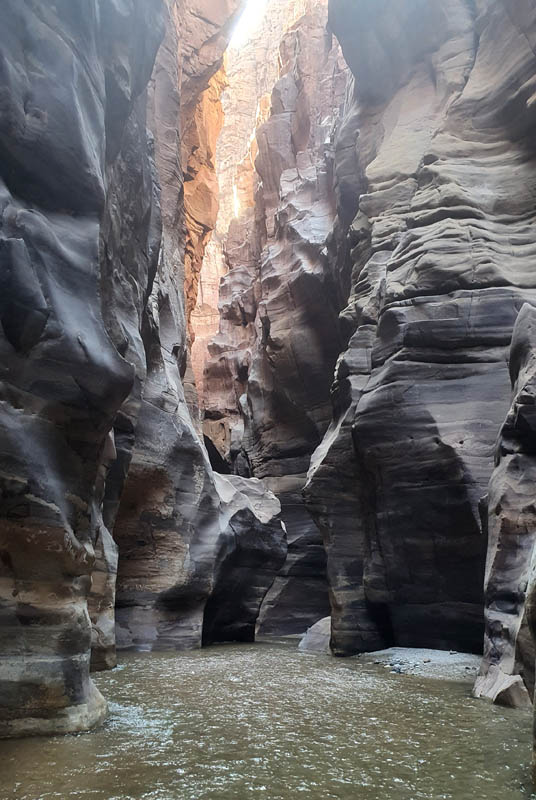
Wadi Mujib - Siq trail
The touristic Siq Trail in Wadi Mujib is one of Jordan's most exciting and challenging adventures. The trail, open between April and October, starts at the Wadi Mujib Visitor Centre and follows the course of the Mujib River through the narrow gorge. From the start, visitors enter the gorge, walking along steep paths and slippery rocks, often waist-deep in water. The route includes climbing waterfalls and swimming in deep pools, with the help of fixed ropes and local guides at the two trickiest points. As you progress, the canyon walls narrow, creating an impressive corridor of rock carved by millennia of river erosion.
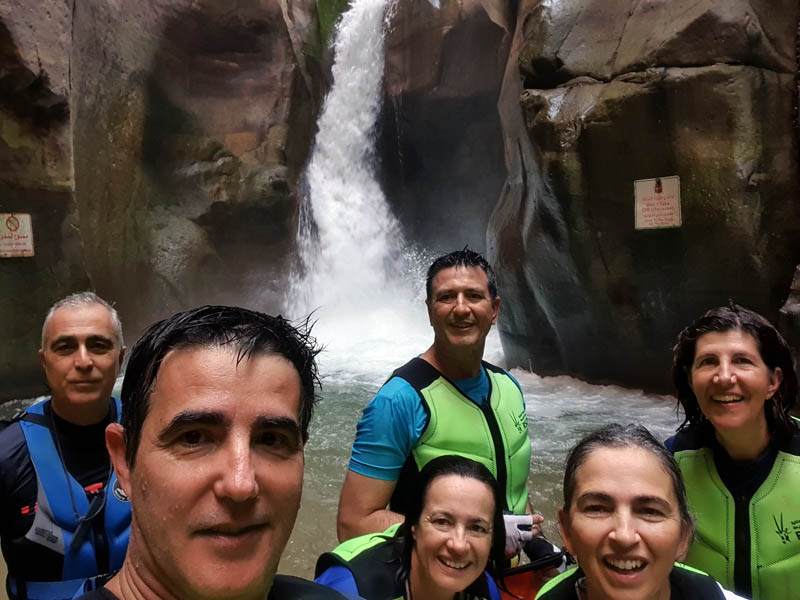
Wadi Mujib - Waterfall at the end of the trail
The truth is that before starting the hike we were a bit scared about the difficulty. It takes about an hour and a half or two to reach the end of the route, but part of the time is lost waiting at the most complicated points, waiting for the people in front of you to pass, as well as those in the opposite direction. The most complicated points are some rocks that you have to pass holding on to ropes (wear gloves if you don't want to peel your hands) and a waterfall that you have to overcome by climbing some stairs where the water falls on you. It looks complicated, but with patience and caution it is easy to overcome. We saw a lot of old people doing the whole route. The truth is that it was one of the most exciting experiences of our visit to Jordan.
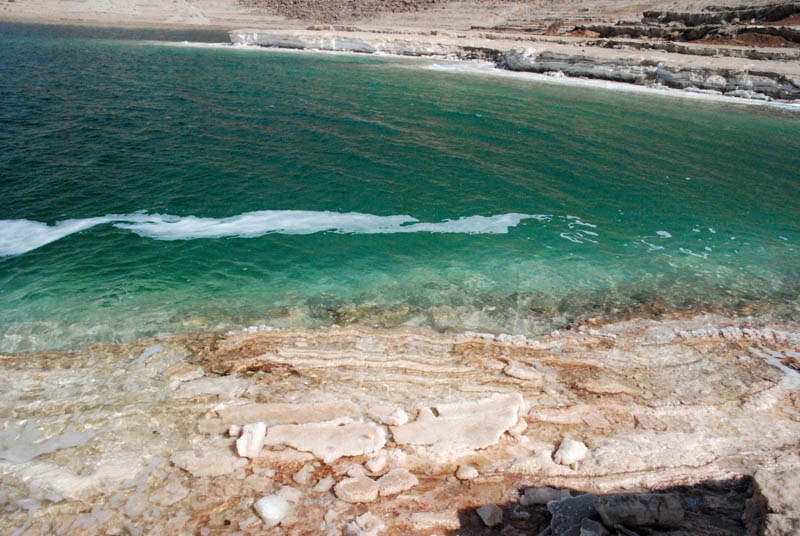
Mar Muerto - Salt beach
(11 km. away) Salt beach: On our way south, we drive along the Dead Sea. From the road we can see different places where salt accumulates. One of them is Salt Beach, known for its impressive salt formations. Unlike conventional beaches, Salt Beach is notable for its crystalline salt deposits that cover the coastline and create surreal, shimmering landscapes. Here the landscape is much more unspoilt, as there are no hotels or swimming pools. To see the salt formations, leave your car in the car park next to the road and walk down to the shore for about ten minutes. Further south, you can also see more salt formations at Wild Salt Shore.
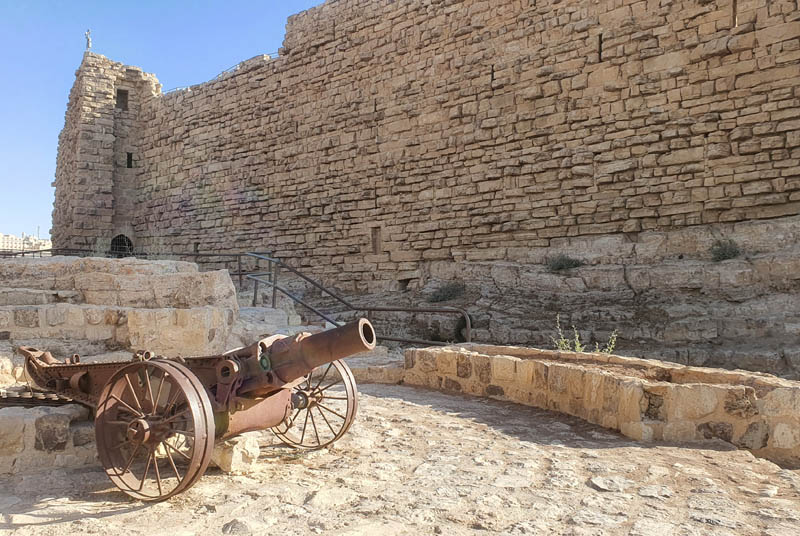
Castillo de Kerak - Entrada
(41 km. away) Al Karak: The visit to Karak castle (Qal'at al-Karak’), one of Jordan's most impressive Crusader castles, is a fascinating journey through medieval history. Built in the 12th century by the Crusaders, al-Karak stands majestically on a hill 1,000 metres above sea level, overlooking the ancient Route of the Kings. From its vantage point, the castle offers panoramic views of the Jordan Valley and the Dead Sea. Upon entering, visitors are greeted by imposing walls and defensive towers that tell stories of epic battles. Exploring its vast corridors and underground chambers, one can imagine the life of the knights and the conflicts that occurred between the Crusaders and the Muslim forces, especially during Saladin's campaigns.
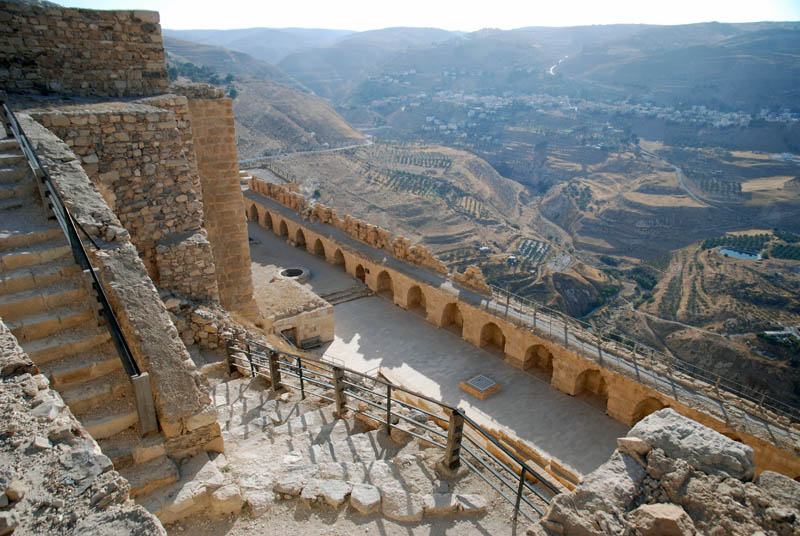
Castillo de Kerak
A tour of Karak Castle reveals an architectural mix that reflects its history of siege and conquest. Visitors can walk through the banqueting hall, the chapel and the dark tunnels that stretch beneath the castle, all silent witnesses to its turbulent past. The fortress also houses a small museum that displays artefacts and provides information about the history of the castle and the surrounding region. As you move through the upper levels, the views from the ramparts are simply spectacular, offering a full view of the modern city of Karak and the surrounding landscapes.
Further south is castillo de Shobak, another historic Crusader fortress perched on a steep hill. This is another fascinating place which unfortunately we were unable to visit due to lack of time, but which many tourists visit on their route.
(163 km. away) Wadi Musa: We arrived in this town which will serve as our base for the next two days to visit Litle Petra and Petra.