Travel to Tuscany
Day 4 Lucca - Cinque Terre - Lucca (156 Km.)
(in 78 Km.) La Spezia: Cinque Terre (in English, "Five Lands") is the name given to a portion of the coast formed by five villages in the province of La Spezia. Thanks to its geographical characteristics, it constitutes one of the main attractions of the Ligurian Riviera. Its origin is a very particular orographic context, which gives rise to a mountainous landscape made up of different layers or "terraces" that descend towards the sea with a steep slope. The hand of man has shaped the terrain without altering the delicate ecological balance, using these declining terraces to develop a particular agricultural technique designed to take full advantage of the layout of the land. In 1997 the Cinque Terre, together with Portovenere and the islands of Palmaria, Tino and Tinetto, were declared a UNESCO World Heritage Site.
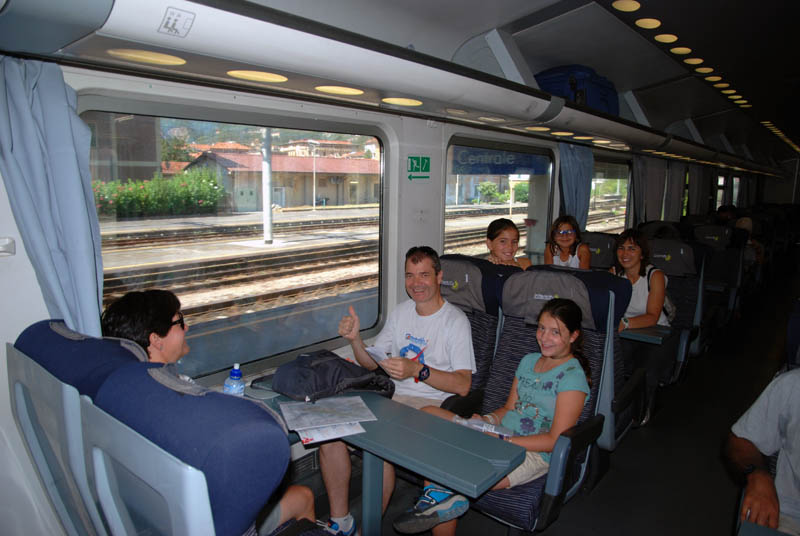
Cinque Terre en tren
The best way to visit Cinque Terre is by train, since access by road is difficult. We left the car in the parking lot of the La Spezia station and bought the Cinque Terre Card Treno, which is a pass that allows us to use the train that connects all the stations between La Spezia and Monterosso al Mare throughout the day. Mistakenly, we got on a train that took us directly to Monterosso, so we started the visit for this town. Ideally two days are needed to visit the five villages, but since we could only dedicate one day to this area, the day was very intense, although highly rewarding.
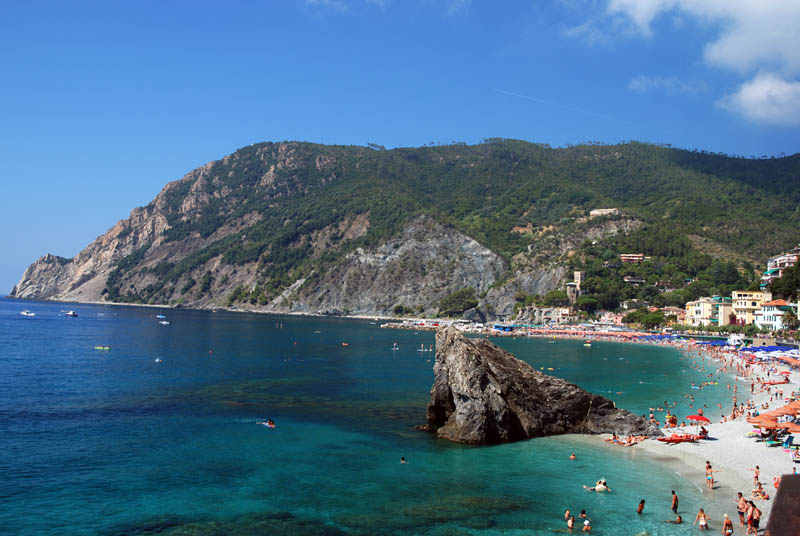
Monterosso al Mare
Monterosso al Mare: Here we find the most extensive beaches in the region, located in the center of a small natural gulf, protected by a modest artificial breakwater. The church of St. John the Baptist stands out, a religious building located in Don Giovanni Minzoni square, built between the 13th and 14th centuries and restructured in the Baroque period. The facade, which dates back to 1307, is characterized by a white bichrome and dark serpentine facing and a large white marble rosette. The interior structure is of a basilica plan and with a division of three naves. The baptismal font, made in 1360, a canvas of the Virgin of the Rosary and a Crucifixion on the left wall of an anonymous Genoese painter from the 17th century are preserved.
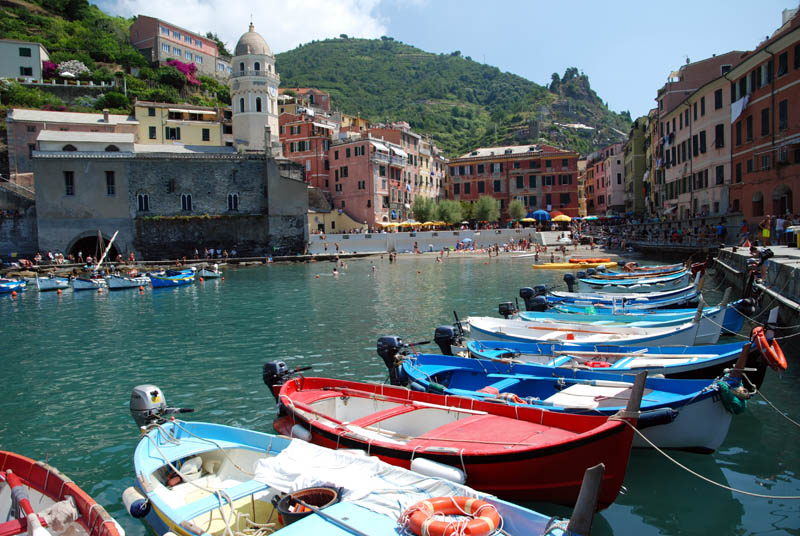
Vernazza
Vernazza: As soon as you leave the station, the main street takes us to Marconi Square, located next to the port (the only natural port of Cinque Terre). Its small port guarantees a safe place, in a natural cove that allows the docking of small and medium-sized boats. Stands out the Church of Santa Margherita d'Antiochia, c. 1318. Unique for its east-facing entryway, it has a nave and two aisles, with an octagonal bell tower rising from the apse area. After climbing some steep steps, we reached the top of a promontory where Castello is located.. Doria Castle - built in the 15th century as a lookout tower to protect the village from pirates. The views from this viewpoint are spectacular. Vernazza is famous for its elegant houses.
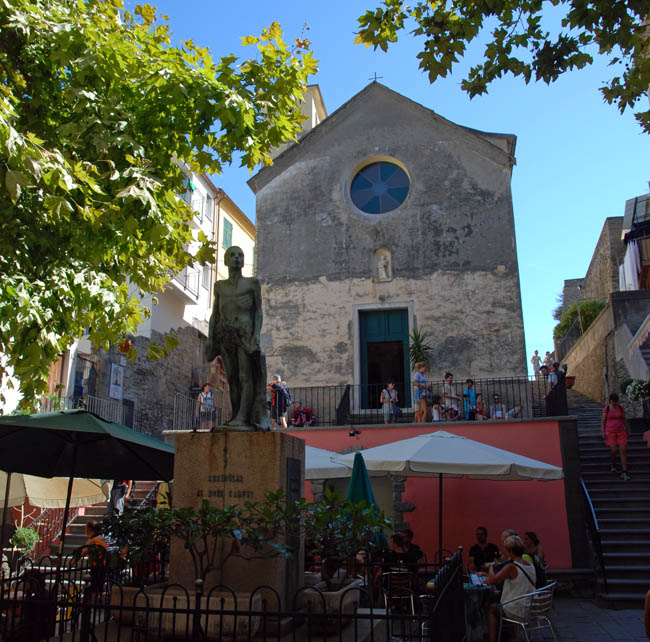
Corniglia
Corniglia: It differs from the rest of the villages in the region in that it is the only one that does not connect directly with the sea, because is located on a promontory of about one hundred meters, surrounded by vineyards distributed in the characteristic terraces on the side that faces the sea. To access Corniglia it is necessary to ascend a long staircase known as Lardarina, made up of 33 sections and a total of 382 steps. The only ruins in Corniglia belong to Genoese fortifications, a stronghold on a cliff plunging into the sea, which dates back to approximately 1556. The Church of S.Pietro and the oratory of S.Caterina stand out. Before going back to look for the train, we made a short lunch break.
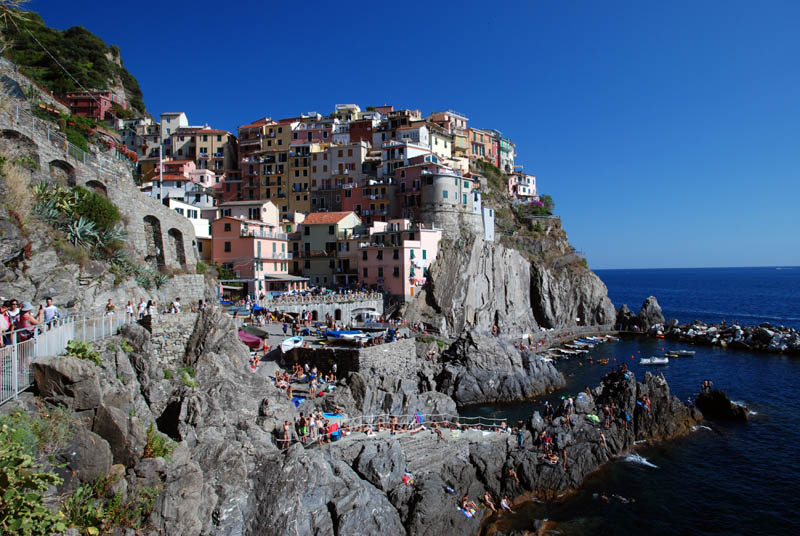
Manarola
Manarola: Situated on a hill, the town of Manarola stretches through the valley, enclosed between two rocky spurs, and descends towards the sea where it houses a small port. The houses are grouped next to each other along the main road, the Via di Mezzo, which in turn follows the course of the water. Manarola may be the oldest of the towns in the Cinque Terre, with the cornerstone of the church, San Lorenzo, dating from 1338. Tourist attractions in the region include a famous walking trail between Manarola and Riomaggiore (called Via dell'Amore, "Love's Trail") and hiking trails in the hills and vineyards above the town. Most of the houses are bright and colourful. From Punta Bonfiglio (or from Parco giochi Paradiso) it is the ideal place from which to take the typical photo of the colorful village. To see Cinque Terre from a different point of view, we made the trip from Manarola to Riomaggiore by boat.
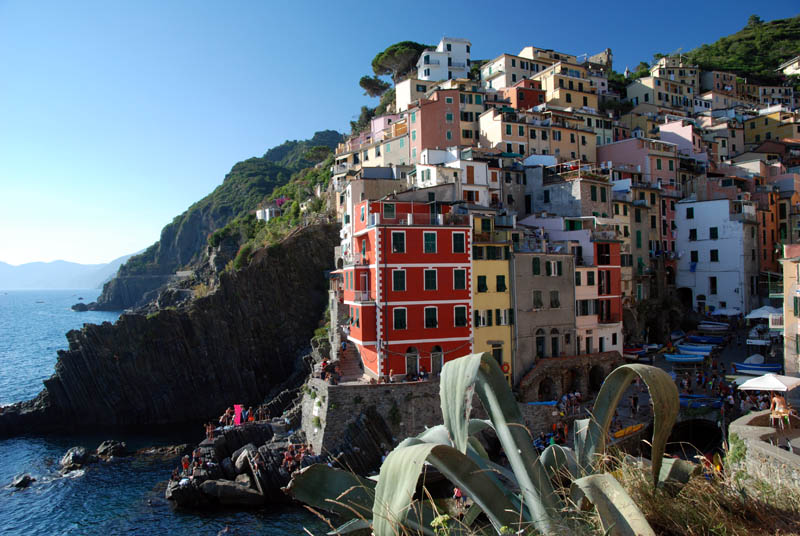
Riomaggiore
Riomaggiore: We disembark between the small beach of this village and the wharf. The historic center, whose original nucleus dates from the 13th century, is located in the valley of the Rio Maggiore, the old Major river from which the village takes its name. The houses are distributed in different parallel levels that follow the abrupt path of the river. The new Stazione neighborhood, named for having developed in the 19th century after the arrival of the railway line, is instead located in the valley formed by the Finale River (Rufinàu). After dark, we stayed for dinner at a restaurant located on the main street, Via Colombo. At that time most of the tourists had already left and we were able to enjoy a little more of the atmosphere of this fishing village.
(in 78 Km.) Lucca: We return to our accommodation.