Travel to Netherlands
Day 4 Driebergen - Utrecht - Amersfoort - Driebergen (61 Km.)
(in 19 Km.) Utrecht: Utrecht is one of the oldest cities in the Netherlands, with origins dating back to the Roman Empire when it was established as a military fort called Traiectum along the Rhine River. During the Middle Ages, Utrecht developed into a religious and cultural center, becoming the seat of the bishopric of the Northern Netherlands. For centuries, it played a central role in Dutch ecclesiastical and political affairs. The city’s layout and many of its monuments reflect this long history, with medieval churches, canals, and structures still intact in the old town. In the modern era, Utrecht has become known as a university city and a transportation hub, with Utrecht Centraal being the busiest railway station in the country. Cycling infrastructure is well developed, allowing easy exploration of both the historical center and its surroundings. Our visit was conducted primarily by bicycle, following a planned route through key points of interest.
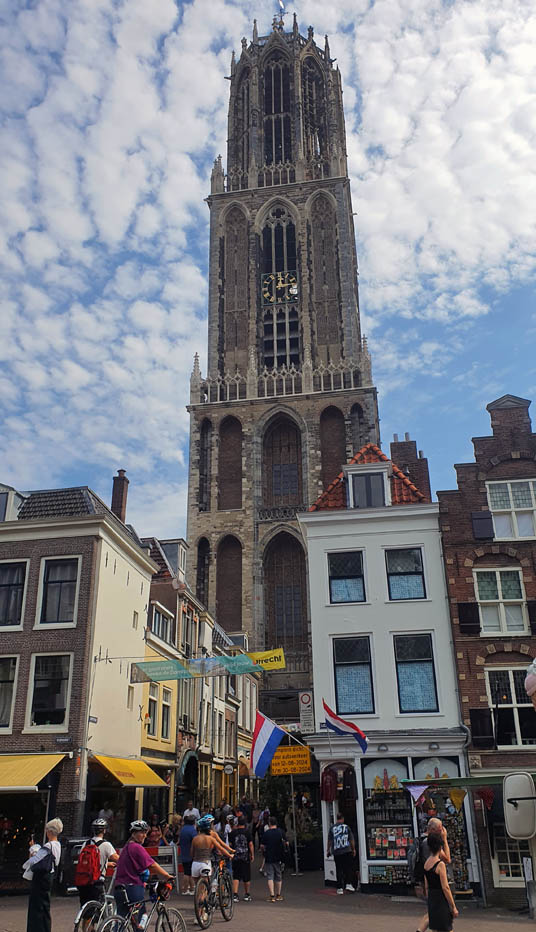
Utrecht - Dom Tower (Domtoren)
We started our visit at the Dom Tower (Domtoren), Utrecht’s most recognizable landmark. The Gothic-style bell tower stands 112 meters tall and was originally part of the Cathedral of St. Martin (Domkerk), which is located adjacent to it. The nave of the cathedral was destroyed by a storm in the 17th century, leaving the tower physically separated from the church building. After viewing the cathedral exterior, there was the possibility to enter to DOMunder, but we didn't. It's an underground visitor experience located beneath Domplein square. It offers an archaeological route through the foundations of the former Roman fortress and medieval structures. Interactive displays and guided tours explain the layers of history that shaped the city center. From there, we cycled north to the Janskerkhof square, where a weekly flower market is normally held. Although it had already closed for the day, stalls and signage indicated its usual setup.
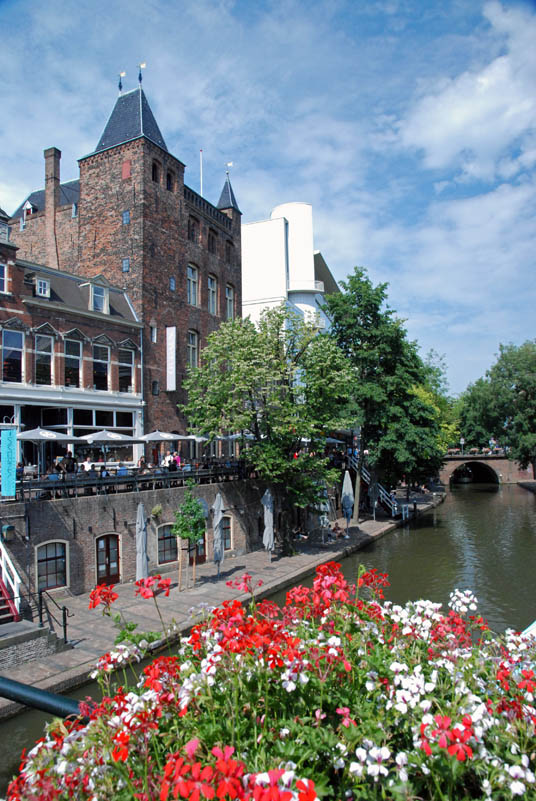
Utrecht - Stadskasteel Oudaen
We proceeded to the Church of St. Willibrord (Sint-Willibrordkerk), located on Minrebroederstraat. This neo-Gothic church, completed in the late 19th century, is notable for its richly decorated interior, though we only viewed it from the outside. Continuing our route, we cycled along the Oudegracht, the main canal of Utrecht. This canal runs through the city center and is lined with wharves, cellars, shops, and restaurants at water level. We passed by the Stadskasteel Oudaen, a 13th-century city castle that now serves as a brewery and restaurant. Its tower and brick façade are visible from the canal path. Near the end of the canal, we visited the Miffy traffic light, a pedestrian signal featuring the character Nijntje, created by Utrecht-born author and illustrator Dick Bruna. The signal is located at the intersection near the Centraal Museum and is part of a series of tributes to the artist.
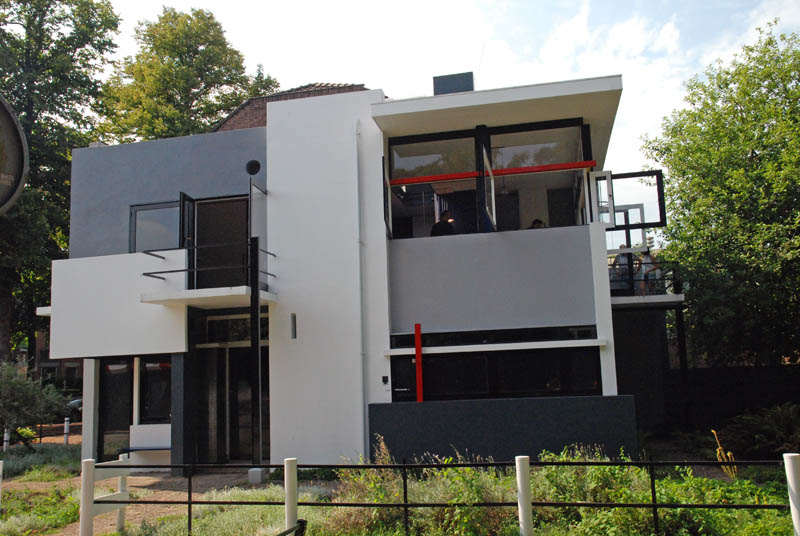
Utrecht - Rietveld Schröder House
After completing our city center loop by bicycle, we returned to our vehicle and drove to the eastern outskirts of Utrecht to visit the Rietveld Schröder House. Designed in 1924 by architect Gerrit Rietveld in collaboration with client Truus Schröder-Schräder, the house is considered a key example of the De Stijl movement. It is now a UNESCO World Heritage Site and museum. Upon arrival, we learned that entry to the house is only possible by guided tour and that reservations must be made several days in advance. As tickets were sold out, we viewed the building’s exterior and observed its characteristic geometric shapes and primary color scheme. The surrounding residential neighborhood also features buildings influenced by Rietveld’s architectural principles. After this stop, we concluded our visit to Utrecht.
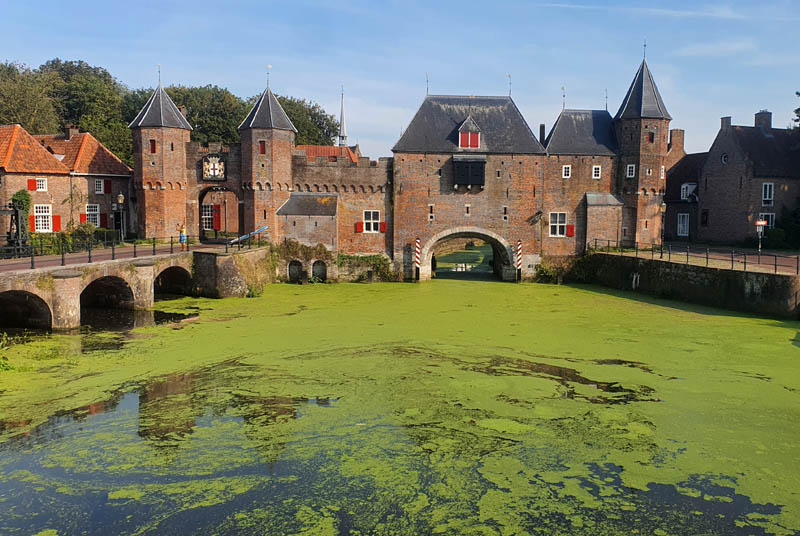
Amersfoort - Koppelpoort
(in 27 Km.) Amersfoort: Amersfoort is a historic city located in the province of Utrecht, in the central Netherlands. The city originated in the 11th century and gained city rights in 1259. It developed around the river Eem and became an important center for trade, textiles, and beer production during the Middle Ages. In the 14th century, the construction of a second city wall began, and many of its gates and fortifications still exist today. Amersfoort was also a center of pilgrimage, particularly due to the miraculous statue of the Virgin Mary kept in the Onze-Lieve-Vrouwetoren. In later centuries, the city was involved in military and railway developments and has preserved much of its medieval urban structure. Today, Amersfoort is known for its well-preserved architecture, canal system, and cultural institutions. We visited the city on foot, following a route that began and ended at the same location, while observing various monuments and historic streets.
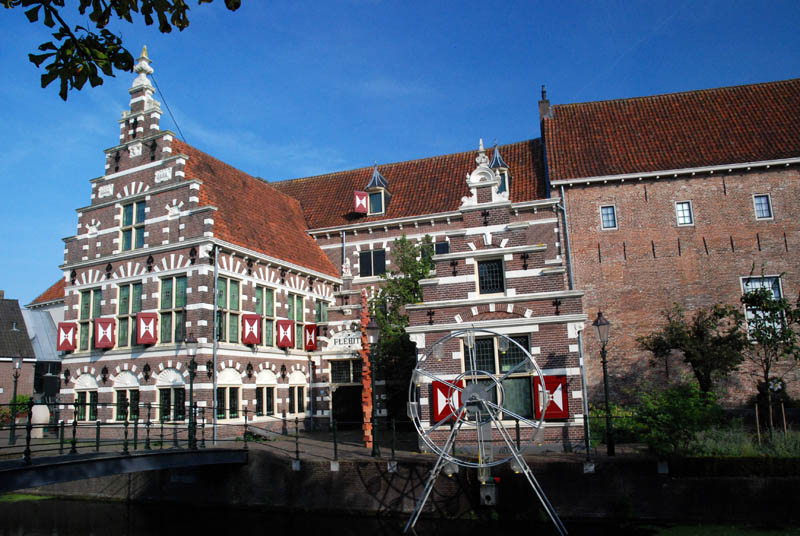
Amersfoort - Museum Flehite
We began our walking route at the Koppelpoort, a combined land and water gate built around 1425. This gate formed part of the city’s second wall and controlled both road and river traffic. It is a prominent example of medieval defensive architecture and was historically operated by a team of guards using a winch mechanism. After passing through the gate, we walked eastward along the canal and passed the Museum Flehite. Housed in three adjoining medieval houses known as the “Huis op de Berg,” the museum contains collections on the history and art of Amersfoort and the surrounding region. Although we did not enter, the museum’s façade displays traditional brickwork and gables typical of local architecture. From there, we continued towards the center of the city via narrow pedestrian streets.
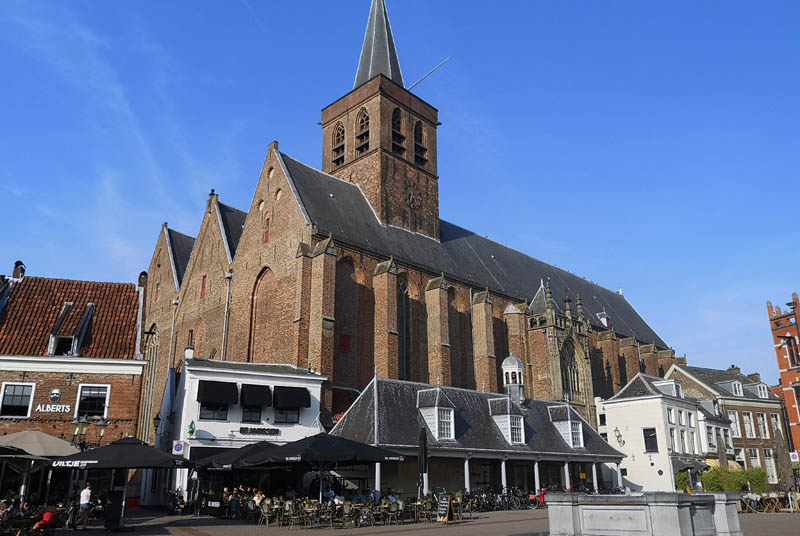
Amersfoort - Sint Joriskerk
The next major site on our route was the Onze-Lieve-Vrouwetoren (Tower of Our Lady), which stands 98 meters tall and is one of the tallest church towers in the Netherlands. Constructed between 1444 and 1500, the tower was originally part of a large church that was destroyed by an explosion in the 18th century. The tower now stands alone and is used as a point of measurement for the Dutch national coordinate system. Continuing south, we reached Hof Square, the main public square of Amersfoort. The square hosts a market several days a week and is bordered by historical buildings and cafes. On the eastern side of the square stands the Sint Joriskerk, a late Gothic hall church that was first mentioned in the 13th century and expanded over the centuries. Its tower, nave, and interior chapels reflect various phases of ecclesiastical architecture in the Netherlands.
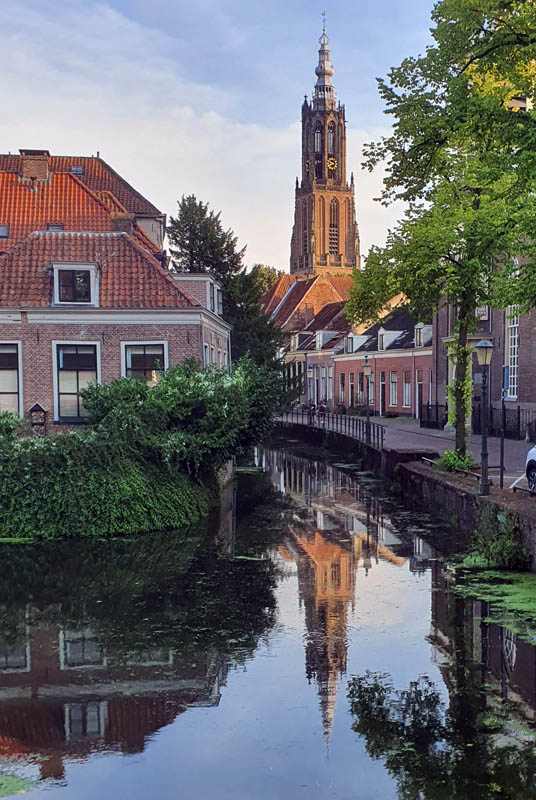
Amersfoort - Onze-Lieve Vrouwetoren
After leaving the square, we walked along Muurhuizen, a street that follows the original outline of Amersfoort’s first city wall. Many of the buildings on this street were constructed using stones from the demolished wall, giving it a cohesive and historical appearance. The street forms a semicircular path around the city center and includes several gates, towers, and former residences. Along the route, we reached Monnikendam, a 15th-century water gate that allowed the passage of the Heiligenbergerbeek stream. The structure includes a double-arched stone bridge and fortification walls and is one of the few remaining examples of a functioning water gate from the medieval period. It marks a transition point between the residential areas of the inner city and the green spaces surrounding it. From there, we looped back toward the western side of the city.
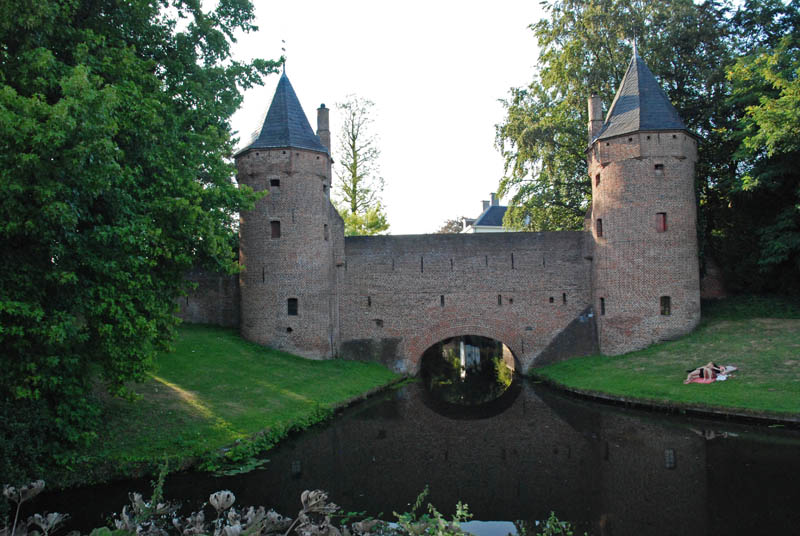
Amersfoort - Monnikendam
As we returned toward the parking area, we passed by the Kamperbinnenpoort, one of the oldest surviving gates of Amersfoort. It dates from the 13th century and once marked the entrance to the medieval city from the west. We then walked along one of the inner canals, viewing moored boats and restored facades. We also observed the Oude Haven (Old Harbor), which now functions as a recreational and residential area but retains its historical layout. The harbor once played a key role in regional trade and water transport. Near the end of our route, we reached the Koppelpoort again, where we saw a hot air balloon floating above the city skyline. This marked the conclusion of our visit to Amersfoort before continuing our journey to the next destination.
(in 15 Km.) Driebergen: We return again to our accommodation.