Travel to Netherlands
Day 3 Driebergen - Amsterdam - Driebergen (120 Km.)
(in 60 Km.) Amsterdam: Amsterdam, the capital of the Netherlands, traces its origins to the late 12th century when it began as a small fishing village at the mouth of the Amstel River. The construction of a dam in the river gave the city its name. By the 17th century, known as the Dutch Golden Age, Amsterdam had become one of the world’s most important ports and a center of finance and trade. Its system of canals, which earned it the nickname "Venice of the North," was developed during this time. The city has since evolved into a global hub for culture, commerce, and tourism. Today, Amsterdam is known for its historic architecture, world-renowned museums, and unique neighborhoods, all accessible by an extensive cycling infrastructure. Our visit followed a full-day bicycle route through some of its most iconic locations.

Amsterdam - Vondelpark
We began our route at Vondelpark, the largest urban park in Amsterdam, located southwest of the city center. The park covers about 47 hectares and includes a network of wide cycling paths, ponds, lawns, and sculptures. From there, we headed toward Museumplein, a large public space flanked by major cultural institutions. This square is home to the Rijksmuseum, the Van Gogh Museum, the Stedelijk Museum, and the Royal Concertgebouw. The green lawn was active with people, and the reflecting pool provided a central focal point. Museumplein is often used for open-air exhibitions and public events. Its layout allows for easy navigation between buildings.
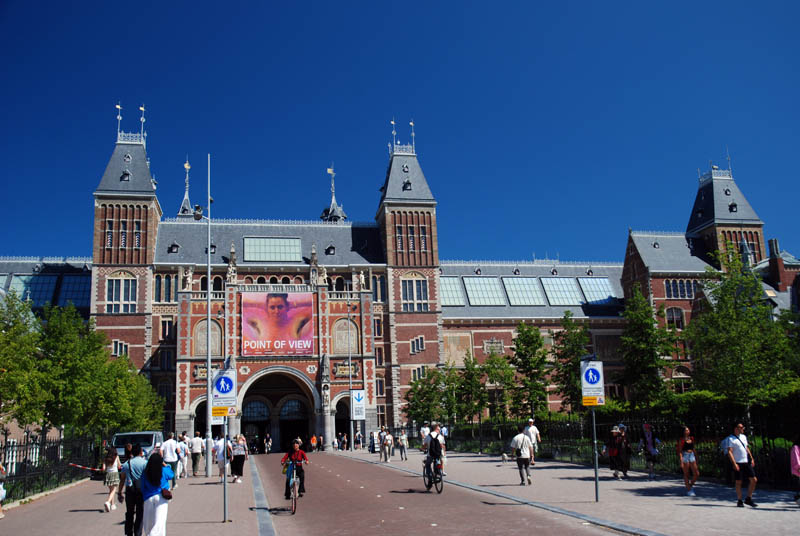
Amsterdam - Rijksmuseum
Next, we crossed through the Rijksmuseum, which houses a vast collection of Dutch art and history. Located at the eastern end of Museumplein, the museum building dates to the late 19th century and was designed by Pierre Cuypers. The main highlights include masterpieces from the Dutch Golden Age such as Rembrandt’s "The Night Watch," Vermeer’s "The Milkmaid," and works by Frans Hals. The galleries are arranged chronologically, with exhibitions covering topics such as Dutch colonial history, decorative arts, and modern photography. The museum also features a large library, a café, and landscaped gardens. Entry was through the central archway under the building, which also serves as a pedestrian and bike passage.
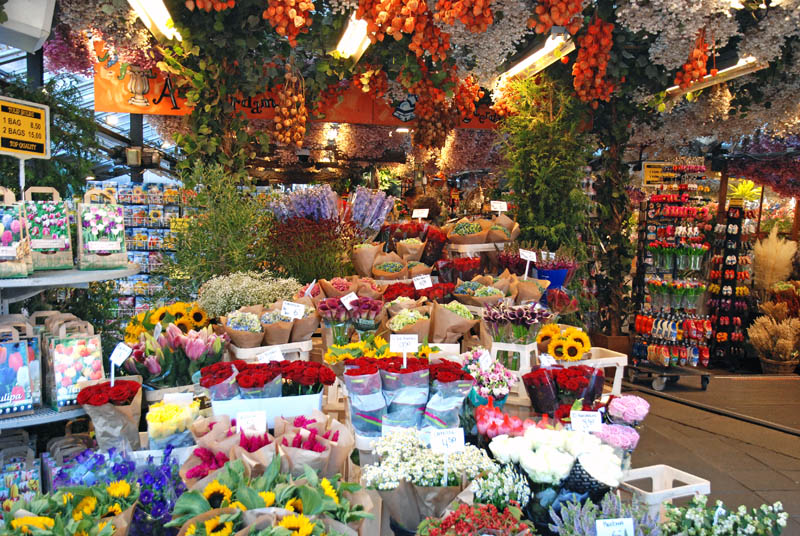
Amsterdam - Flowermarket (Bloemenmarkt)
From the museum district, we cycled north toward the Bloemenmarkt, also known as the Flower Market, situated along the Singel canal between Koningsplein and Muntplein. This floating market is composed of flower stalls mounted on houseboats. Although it primarily caters to tourists, it still offers a wide variety of flowers, bulbs, and souvenirs. We purchased tulip bulbs that were certified for export and packaged for planting at home. The market also sells traditional Dutch wooden clogs, magnets, and blue Delft pottery. The nearby Munttoren, a historic clock tower, marked the eastern end of the market area.

Amsterdam - Canal
After leaving the Flower Market, we continued on foot into the Begijnhof, a secluded courtyard dating back to the Middle Ages. Originally home to a Catholic sisterhood known as the Beguines, the courtyard features well-preserved houses, including one of the oldest wooden buildings in Amsterdam. The chapel within the Begijnhof is still used for religious services. Entry is free, though visitors are expected to remain quiet out of respect for residents. The site is accessed via a narrow entrance off Spui square. The courtyard layout includes a central lawn, mature trees, and plaques describing the history of the women who once lived there.
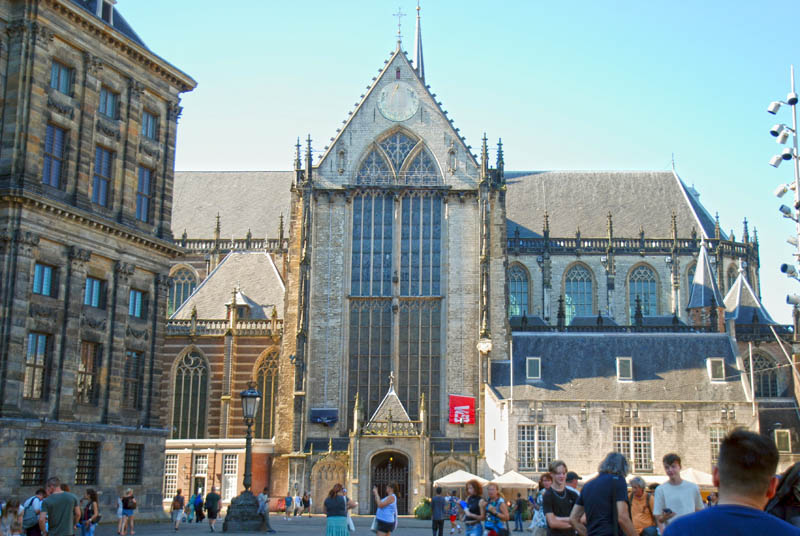
Amsterdam - Nieuwe Kerk (New Church)
Returning to our bikes, we crossed over into De Negen Straatjes (The Nine Streets), a collection of small boutique-lined streets within the canal belt. These streets connect the main canals between the Prinsengracht and Singel and are known for their independent shops, cafés, and design stores. Continuing west, we reached the Jordaan district, originally a working-class neighborhood that has undergone significant gentrification. The streets here are narrower and quieter, with galleries, bookstores, and residential buildings. This area retains a local character and is laid out in a grid intersected by several canals.

Amsterdam - Damrak Waterfront
We passed by the Anne Frank House on Prinsengracht, where Anne Frank and her family hid during World War II. The building now serves as a museum, attracting long queues throughout the day. The exterior remains modest and is marked by a plaque indicating its historical significance. Nearby, the Westerkerk stands as a landmark with its tall tower visible from many points in the city. The area around the museum is well-paved and has dedicated bike lanes, although it can be crowded with pedestrians.
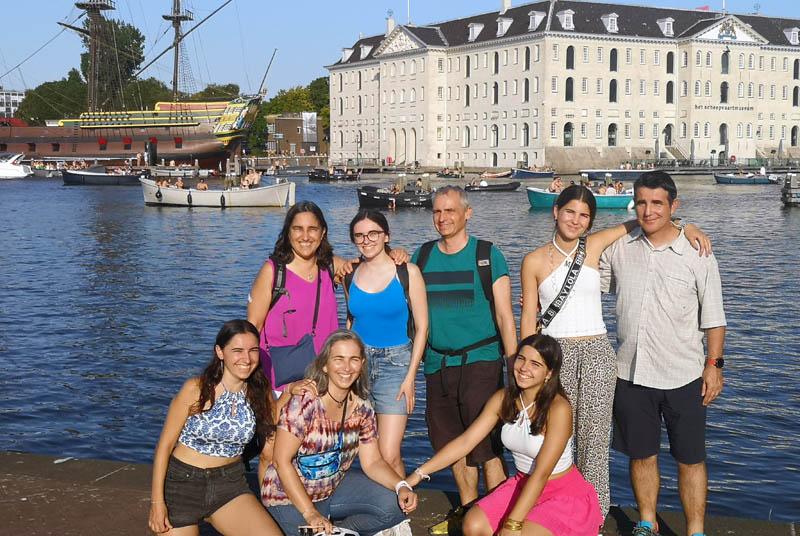
Amsterdam - Scheepvaartmuseum
From the Jordaan, we cycled toward Dam Square, Amsterdam’s central plaza. The square is bordered by the Royal Palace, originally built as a city hall in the 17th century, and the Nieuwe Kerk (New Church), now used for exhibitions and royal events. The National Monument, a white stone pillar honoring Dutch soldiers and resistance members, stands in the center of the square. Surrounding buildings include department stores, banks, and historic hotels. The square serves as a gathering point for tourists and often hosts temporary fairs and demonstrations.

Amsterdam - Red Light District
Continuing northeast, we followed the Damrak waterfront, a wide street lined with shops and restaurants that leads directly to Amsterdam Centraal Station. The station building, designed by the same architect as the Rijksmuseum, functions as a major transport hub for trains, trams, and ferries. From there, we cycled east toward the Oosterdokseiland district, where we walked in front of the Scheepvaartmuseum (National Maritime Museum), which explores Dutch naval history. Nearby, the Nemo Science Museum is housed in a modern, ship-shaped building designed by Renzo Piano. It offers interactive exhibits and a rooftop terrace with panoramic views.
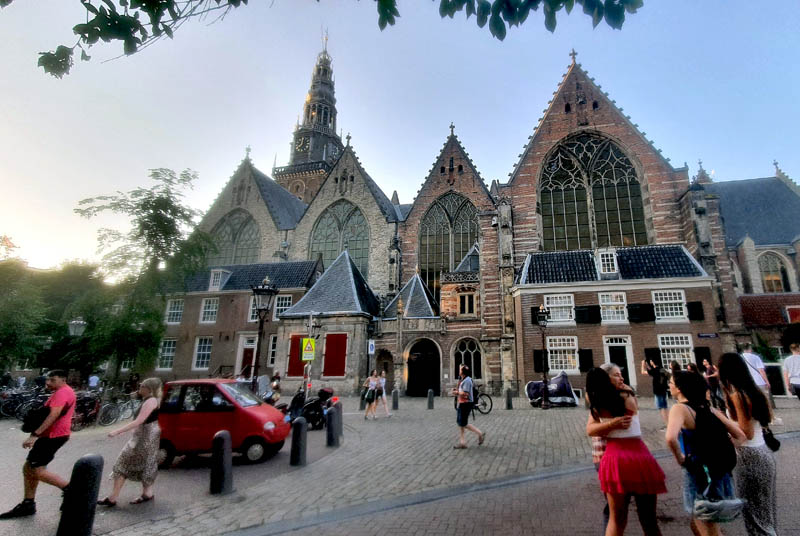
Amsterdam - Oude Kerk (Old Church)
On our return toward the center, we passed through the Red Light District, located in the De Wallen neighborhood. The area includes narrow alleyways lined with illuminated display windows, bars, and adult shops. Despite its reputation, the district also includes several historic sites, the most notable being the Oude Kerk (Old Church). This Gothic church is the oldest building in Amsterdam and is now used for contemporary art exhibitions and concerts. The surrounding canals are among the oldest in the city, and bridges offer access to both sides of the district.

Amsterdam - Sunset on the Amstel Canal
Before concluding our day, we cycled south along the Amstel River and paused near the Magere Brug (Skinny Bridge), a traditional Dutch drawbridge made of white-painted wood. The bridge connects the riverbanks between the Kerkstraat and Nieuwe Kerkstraat and is illuminated in the evenings by hundreds of small lights. We observed the sunset from a canal-side viewpoint nearby before making our way west toward the Foodhallen, a modern indoor food market located in a former tram depot. The Foodhallen includes various food stalls offering Dutch and international cuisine. It served as our final stop for the day, where we had dinner before concluding our cycling route.
(in 60 Km.) Driebergen: We return to our accommodation.