Travel to Iceland
Day 2 Seljalandsfoss, Skogafoss, Vik, Fjaðrárgljúfur (318 Km.)
(3 Km. away) Seljalansfoss: Seljalandsfoss is an impressive waterfall located in the south of Iceland, known for its uniqueness and scenic beauty. What sets Seljalandsfoss apart is its approximately 60-metre waterfall that cascades down from the cliff on the south coast of Iceland. However, what makes this waterfall even more special is the possibility to walk behind it, providing a unique perspective and an unforgettable experience for visitors. During the warmer months (in winter it is not possible to walk behind it due to the risk of slipping on the ice), this feature allows visitors to explore a natural cave formed by the constant fall of water, offering spectacular views from inside the waterfall.

Seljalansfoss
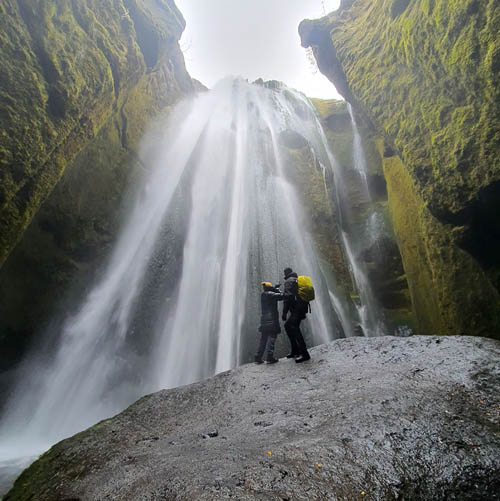
Gljúfrabúi: To the left of Seljalandsfoss is, just a few hundred metres away, a hidden waterfall that goes unnoticed by some visitors. This is Gljúfrabúi waterfall, also known as the Hidden Waterfall. From Seljalandsfoss, Gljúfrabúi can be accessed by walking along a path that follows the stream that feeds both waterfalls. This waterfall is partially hidden behind a cliff and is surrounded by an impressive rocky canyon. What makes Gljúfrabúi truly special is its location inside a narrow crevice, which requires a short but exciting walk along the stream to reach its interior. There is no footbridge, so it must be reached by stepping over stones that are not covered by water. Once inside, we find a small pool over which the 40-metre high waterfall falls from the top of the cliff.
Gljúfrabúi
(30 Km. away) Skogafoss: Skogafoss, one of Iceland's most iconic waterfalls, is noted for its impressive height of approximately 60 metres and width of almost 25 metres. Located in southern Iceland, near the village of Skógar, this majestic waterfall is fed by the Skógá River, which flows from the Eyjafjallajökull and Mýrdalsjökull glaciers. What makes Skogafoss truly impressive is its free fall, which creates a roaring curtain of water that can be heard from far away. Visitors can approach the base of the waterfall and feel the force of its waters as the refreshing spray fills the air. In addition to its breathtaking natural beauty, Skogafoss is surrounded by spectacular scenery, with green meadows and rugged mountains. There is the option of ascending a 400-step metal staircase leading to a viewing platform located near the top of the waterfall, which has been used as a location for such famous TV series as Game of Thrones and Vikings.

Skogafoss
(27 Km. away) Dyrhólaey: Dyrhólaey, an impressive promontory of volcanic origin located on the south coast of Iceland, offers visitors a spectacular panoramic view of the Atlantic Ocean and surrounding landscapes. With an elevation of approximately 120 metres above sea level, Dyrhólaey is known for its iconic natural stone arch that rises from the sea, creating a distinctive silhouette against the horizon. This natural monument serves as a refuge for a variety of seabirds, including puffins and gannets, which nest on the cliffs during the breeding season. In addition to its scenic beauty, Dyrhólaey has a rich cultural history, being a place of historical significance and Icelandic legends. In former times, the peninsula was used as a lookout point to guard the coast and defend against possible enemy invasions.

Dyrhólaey
On the same peninsula where Dyrhólaey is located, we also visit the Reynisfjara viewpoint, from which we can see Reynisfjara beach from the west. From here, we can see in the foreground Arnardrangur, also known as the "Eagle Pillar", an imposing basalt promontory that rises vertically above the Atlantic Ocean.
(20 Km. away) Reynisfjara Beach: Located near the town of Vík í Mýrdal, it is a black sand beach that captivates visitors with its dramatic beauty and breathtaking scenery. This unique beach is flanked by high black basalt cliffs, formed by ancient volcanic activity, which contrast powerfully with the dark sand and the Atlantic Ocean stretching to the horizon. Reynisfjara is known for its extraordinary rock formations, including the famous Reynisdrangar basalt pillars, which rise majestically from the sea. These basalt columns add a mysterious and unearthly element to the landscape, and are shrouded in legends and myths of Icelandic mythology.

Reynisfjara Beach
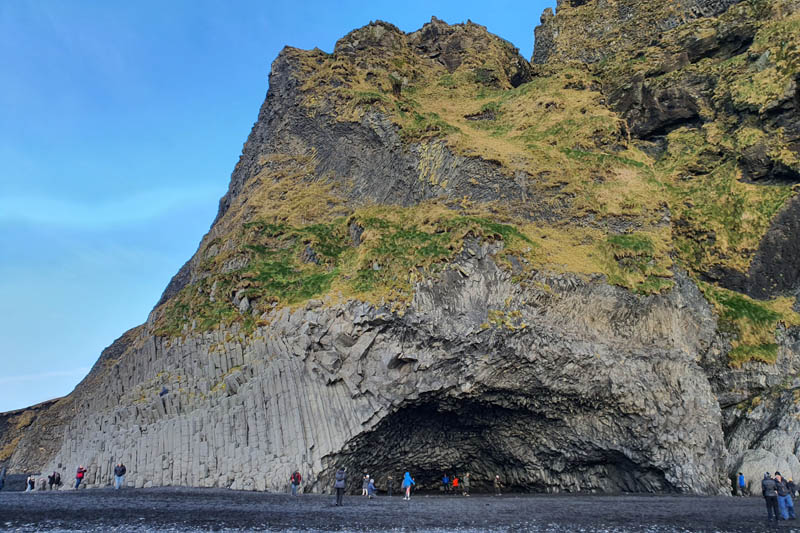
Reynisfjara beach is black because of the eruption of the Katla volcano centuries ago, when molten lava flowed ashore and solidified on contact with the cold water of the Atlantic Ocean. Erosion over the centuries has worn away the black rock to the shiny powdery black sand that we see today. In 1991, this beach was ranked as one of the ten most beautiful beaches in the non-tropical world. In 2021, Reynisfjara was ranked the sixth best beach in the world. Another attraction of Reynisfjara beach is the Hálsanefshellir cave. Inside the cave is a set of columns, created by the rapid cooling of the lava flows, presenting a fascinating hexagonal pattern that adds to the mystique and natural beauty of the cave. Access to the cave is from the beach, tide permitting. It is therefore advisable to avoid the hours of high tide.
Hálsanefshellir
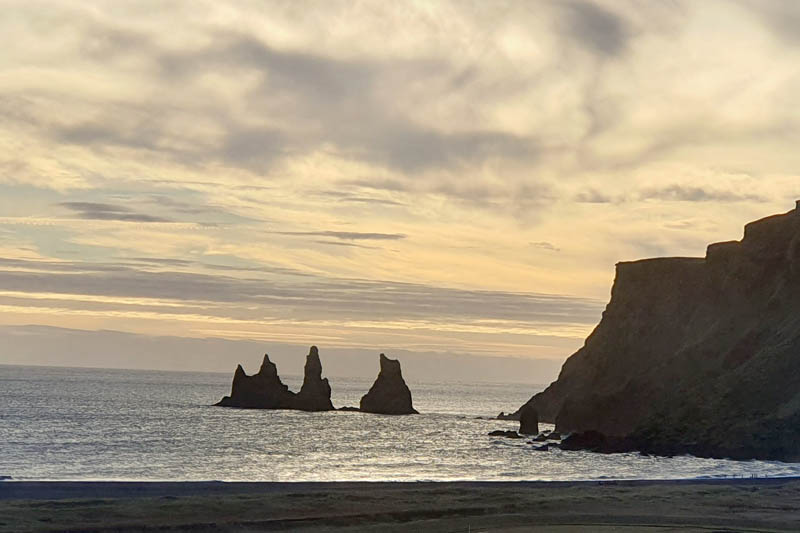
In front of the beach we spot rocks known as the three trolls (Reynisdrangar). Reynisdrangar are basalt pillars rising majestically from the Atlantic Ocean. Thousands of years ago, Reynisdrangar was formed due to volcanic activity. Over time, erosion caused by wind, rain and waves has gradually worn away the Reynisfjall mountain, leaving the three sea pillars alone. The tallest of these pillars is 66 metres high. The pillars are said to have been formed from the legend of two trolls who tried to drag a three-masted ship ashore and, failing, turned into rock spires at dawn. After visiting the beach, we stopped for lunch in Vík, from where we could once again look out over the rocks of Reynisdrangar.
Vík - The three trolls (Reynisdrangar)
(80 Km. away) Fjaðrárgljúfur canyon: Formed by the erosion of the Fjaðrá River over thousands of years, the canyon stretches approximately 2 kilometres in length and reaches depths of up to 100 metres. Its basalt walls, sculpted by the constant flow of water, exhibit a variety of shapes and textures. Along the canyon, the river meanders between the imposing rock walls, forming meandering meanders and small waterfalls that add to the charm of the panoramic view. Visitors can explore trails that wind along the rim of the canyon, offering spectacular views at every turn or from one of the viewpoints. We were short on time and had to limit ourselves to photographing it from the bridge at the end of the canyon. A scene from the film Thor: The Dark World was filmed here.

Fjaðrárgljúfur canyon
(79 Km. away) Svínafellsjökull: Svínafellsjökull is a glacier tongue of Vatnajökull, Europe's largest ice cap. It is located in the Skaftafell Nature Reserve, which used to be a National Park of its own before the creation of the huge Vatnajökull National Park. Access to Svínafellsjökull is easy, as it is located just off the Circular Road that circles the country. We walk from the car park for about 10-15 minutes to the glacier, but there is hardly any light left. Almost in darkness, we enjoy the silence, broken sporadically by the occasional crack in the ice.

Sunset near Hólmur
(79 Km. away) Vagnsstaðir: We arrive at our accommodation, the Vagnsstadir Guesthouse, hoping to finally catch a glimpse of the Northern Lights, but after a sunny day, the night turns cloudy again.