Travel to Iceland
Day 3 Diamond beach, Fjallsárlón, Jökulsárlón (483 Km.)
(26 Km. away) Jökulsárlón: We want to start early with a visit to Jökulsárlón, one of Iceland's most impressive attractions. It is the largest and most spectacular glacial lagoon in the country. Located on the southeast coast of Iceland, Jökulsárlón was formed by the retreat of the Breiðamerkurjökull glacier, part of the vast Vatnajökull ice field. The lagoon is dotted with icebergs calving from the glacier, creating a surreal landscape of unique shapes and colours. The icebergs float serenely in the turquoise water, reflecting the sunlight and offering a breathtaking view. We arrive before the ticket offices opening time of the various companies offering boat trips between the icebergs. The sun is not yet shining on the glacier ice and we enjoy the intense blue colour of some of the ice. Once the ticket office is open, we book a tour with Glacier Lagoon Amphibian Boat Tours. Unfortunately, there is no availability until 11:10 AM. We take advantage of the waiting time to visit the neighbouring Diamond Beach.
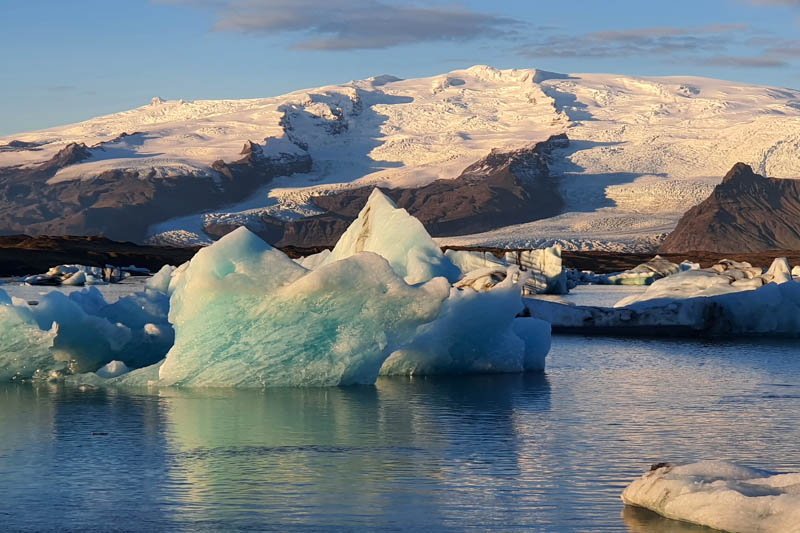
Jökulsárlón
(1 Km. away) Diamond Beach: Diamond Beach, located just across the road from the Jökulsárlón glacial lagoon on Iceland's southeast coast, is a natural wonder known for its breathtaking views and unique scenery. This black sand beach is named after the numerous icebergs that break off from the Breiðamerkurjökull glacier and float out to sea. These icebergs stranded on the beach look like sparkling diamonds scattered on the dark sand, creating a dazzling spectacle that attracts visitors from all over the world. The combination of black sand, turquoise water and white icebergs creates a stunning contrast that leaves onlookers in awe. In addition to its visual beauty, Diamond Beach is an ideal place to observe wildlife, with frequent sightings of seals playing among the icebergs or sunbathing on the shore.
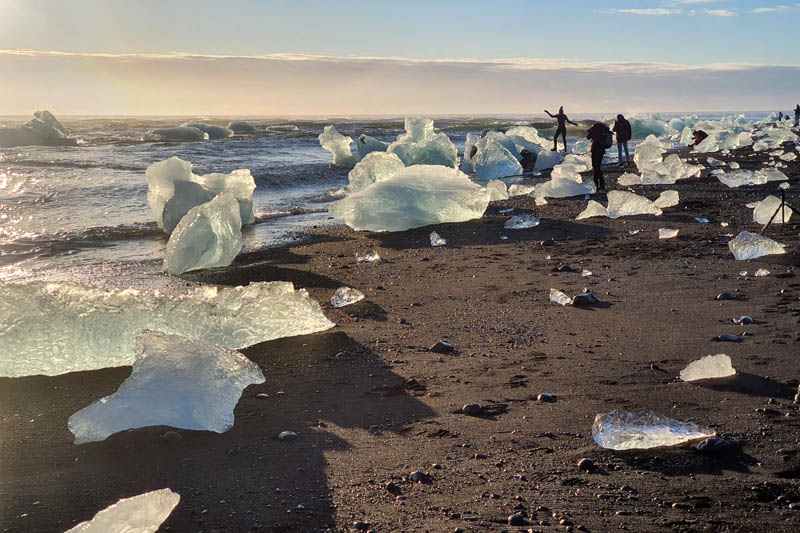
Diamond Beach
We return at the agreed time to Jökulsárlón, to start the tour contracted with Glacier Lagoon Amphibian Boat Tours. They tell us that a group that was supposed to share the tour with us has not shown up and that they are not going to do the tour just for us. They offered to refund our money or do it three hours later. We were totally disappointed with this company, which treated us very badly. We cannot wait that long, as we have about six hours drive to Lake Myvatn, where we have booked our next accommodation. Our alternative was to book a Zodiac excursion with Ice Lagoon, a company that treated us very well. They had availability for us just over an hour later. We took advantage of the hour's wait to visit the nearby Fjallsárlón glacier.

Fjallsárlón
(12 Km. away) Fjallsárlón: Fjallsárlón is an impressive glacial lagoon, less well known than its more famous neighbour, Jökulsárlón. However, it is by no means lacking in beauty and majesty. Like Jökulsárlón, Fjallsárlón was formed by the retreat of the Breiðamerkurjökull glacier, a tongue of the vast Vatnajökull ice field. The lagoon is surrounded by mountains and glaciers, creating a stunning and tranquil setting. What distinguishes Fjallsárlón are the icebergs floating in its waters, many of which are larger and more spectacularly shaped than those in Jökulsárlón. In addition, Fjallsárlón offers the opportunity to experience Iceland's natural beauty with fewer crowds, allowing for a quieter, more contemplative experience. The lagoon, being smaller in size, allows for a closer view of the glacier front and all its details.
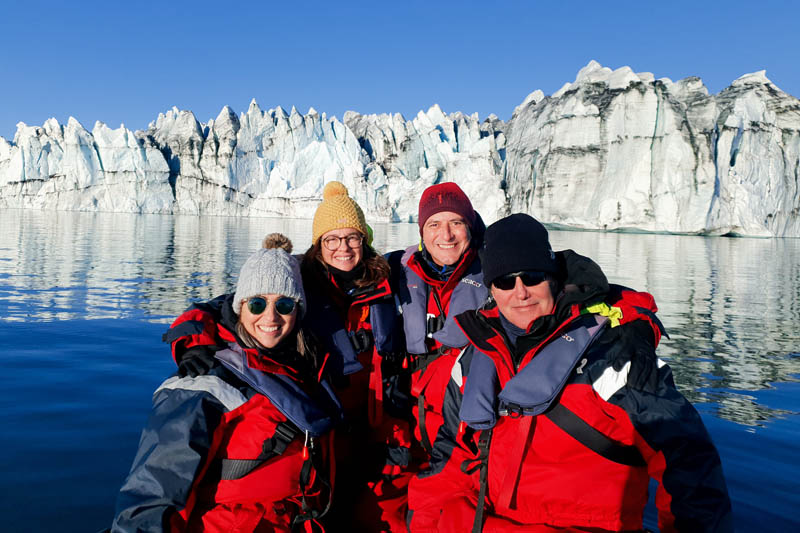
Jökulsárlón
(11 Km. away) Jökulsárlón: We board the zodiac, bound for the front of the glacier, which is about eight kilometres across the lagoon. The duration of the zodiac boat trip is about 75 minutes. We pass between icebergs, some of which look like sculptures. We are fortunate to enjoy a completely sunny day (on our previous visit the lagoon was full of fog). The zodiac boat passes very close to the front of the glacier and we see a small chunk of ice break off (calving). The image of the reflection of the ice on the water of the lagoon is spectacular. The lagoon is known for its wildlife, with seals often seen resting on the icebergs or swimming in the waters. We had the chance to see a couple of seals on top of a couple of ice floes, as well as a few more swimming.

Jökulsárlón
Since 1890, the Breiðamerkurjökull glacier has retreated a total of 5.6 km (3.5 mi) during the 20th century. This retreat has been attributed to rising temperatures between 1920 and 1965. In 1933 or 1934, a proglacial lake or lagoon formed in the depression left by the retreating glacier, which has since grown in size as the glacier continues to retreat. In 1975, Jökulsárlón Lagoon had an area of approximately 8 km2 (3.1 sq mi); by 1998, its area was almost 15 km2 (5.8 sq mi); and by 2004, it had grown to 17.5 km2 (6.8 sq mi). By 2010, the depth of the lagoon was approximately 200 m (660 ft) where the glacier tongue used to be. Exposed glacial moraines have been observed on both sides of the water.
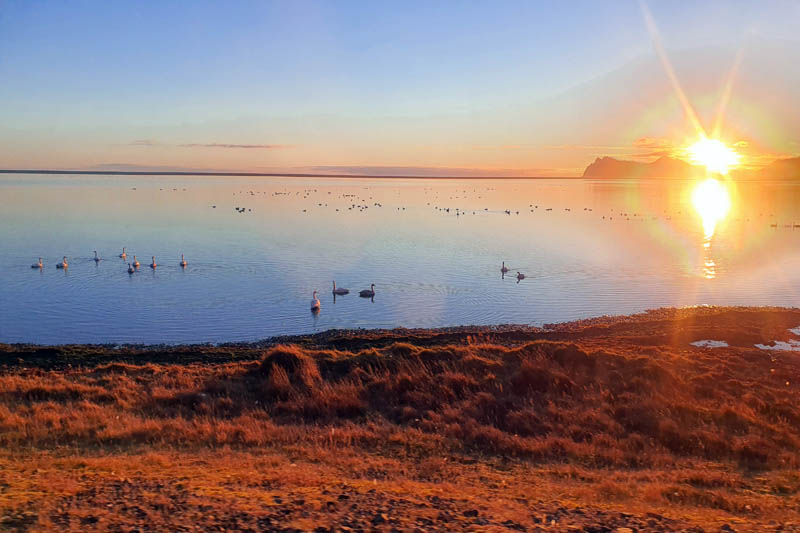
Sunset in Hvalnes
We have a long way to go to our accommodation. We drive through the southeast of the island on our way to Egilsstaðir. When we reach the junction of Ring road 1 and road 95 we have to make a decision. In the old days, the Ring road used to run along today's road 95 through the Breiðdalsheiði pass, at an altitude of 470 metres. As this road was frequently cut off by snow or fog, in 2017 the Ring road was moved to the coast, with a much longer route. As the day was clear, we decided to continue along road 95. After dark, we arrived in Egilsstaðir, where we refuelled and bought some food at the Bonus supermarket, one of the cheapest in the country.
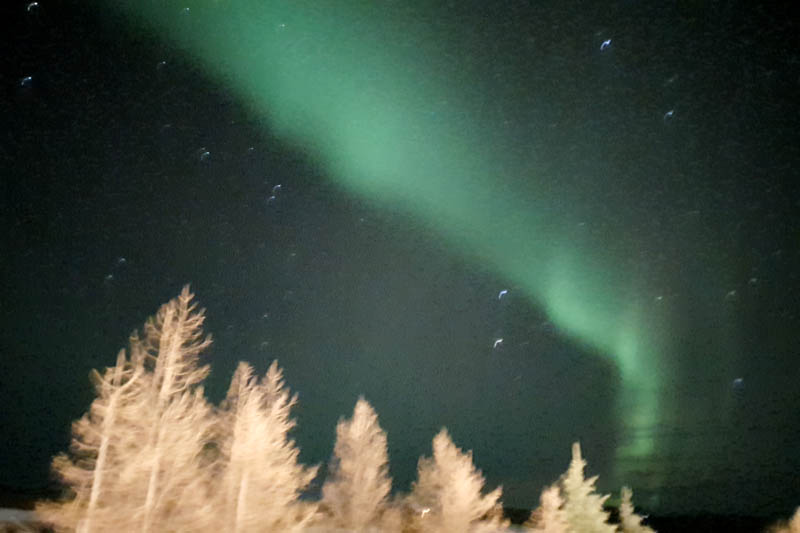
Northern Lights in the Lake Myvatn area
(433 Km. away) Skútustadir: Due to the hours lost because of the amphibious boat company, we don't have time to go and see the Detifoss waterfall. Arriving at last at Lake Mývatn, we find a van carrying a Korean family crossed in the middle of the road. After helping them contact their rental company's roadside assistance, we beheld our first Northern Lights, which was the goal of our trip. We were very excited, although the aurora was not really too spectacular, as it was of low intensity. Fortunately, the following nights would be more intense.