Travel to Singapore
Day 2 Marina Bay
After lunch in Chinatown, we travelled by MRT to Marina Bay Sands, one of Singapore's most recognizable landmarks. Opened in 2010, the integrated resort was designed by architect Moshe Safdie and consists of three 55-storey towers connected at the top by the SkyPark, a structure extending 340 metres in length. The complex includes a luxury hotel, convention centre, shopping mall, theatres, restaurants, museum, casino, and observation deck. Built on reclaimed land as part of the Marina Bay redevelopment project, Marina Bay Sands has become one of the defining elements of Singapore's modern skyline. After entering the complex, we followed the clearly signposted route leading to the lifts for the Sands SkyPark Observation Deck. Security checks were carried out before we entered the high-speed elevators, which reached the rooftop in less than a minute. Information panels near the entrance explained the history of the project, its construction, and the engineering challenges involved in supporting the large cantilevered platform connecting the three towers.
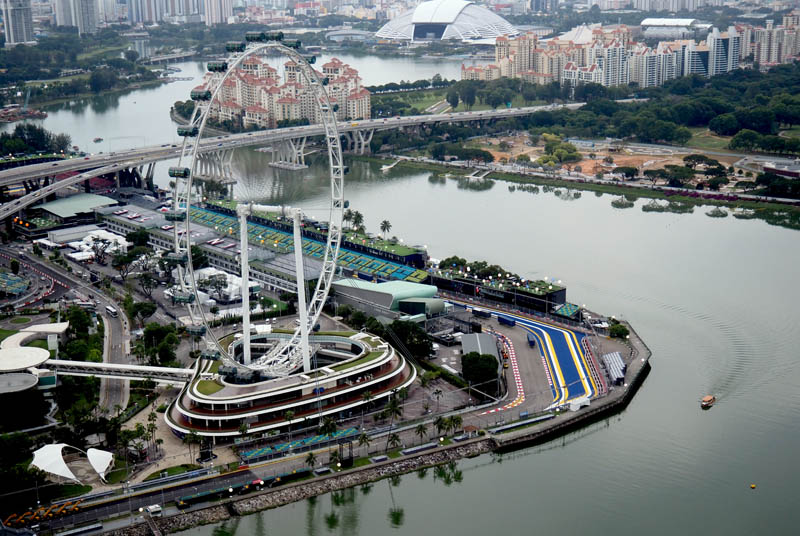
Singapore Flyer
The entire Marina Bay district stands on land reclaimed from the sea as part of Singapore's long-term urban development strategy. Beginning in the 1970s, extensive land reclamation projects transformed what had once been open coastal waters into new areas for business, tourism, and public spaces. Marina Bay Sands occupies one of these reclaimed sites and was conceived as the flagship project of the government's plan to create a new downtown district. Construction began in 2006 and required advanced engineering techniques to support the three hotel towers and the elevated SkyPark that spans them. Adjacent to the resort, the reclaimed land also made possible the creation of Gardens by the Bay, a 101-hectare horticultural park developed to increase Singapore's urban green spaces while showcasing sustainable landscape design. Together, Marina Bay Sands and Gardens by the Bay have become central elements of the Marina Bay master plan, representing the transformation of reclaimed land into one of Singapore's principal commercial, cultural, and recreational areas.
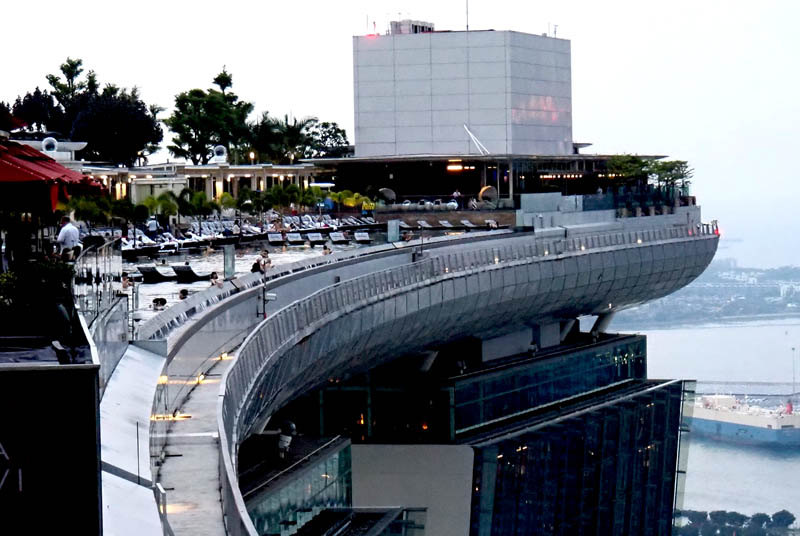
Marina Bay Sands infinite pool
The Sands SkyPark Observation Deck occupies the northern section of the rooftop structure and offers uninterrupted 360-degree views across Singapore. From this elevated platform, we could appreciate the scale of the city and identify many of its principal landmarks. The observation deck is located beside the hotel's famous infinity pool, which stretches for approximately 150 metres along the rooftop. Access to the pool is reserved exclusively for hotel guests, but from the observation deck it is possible to observe its design and its position overlooking Marina Bay. Information displays describe the dimensions of the SkyPark and explain how the rooftop platform was assembled using prefabricated steel sections lifted into place during construction. Benches and viewing areas are distributed around the perimeter, allowing visitors to stop and identify different districts using orientation panels installed at several points along the deck.
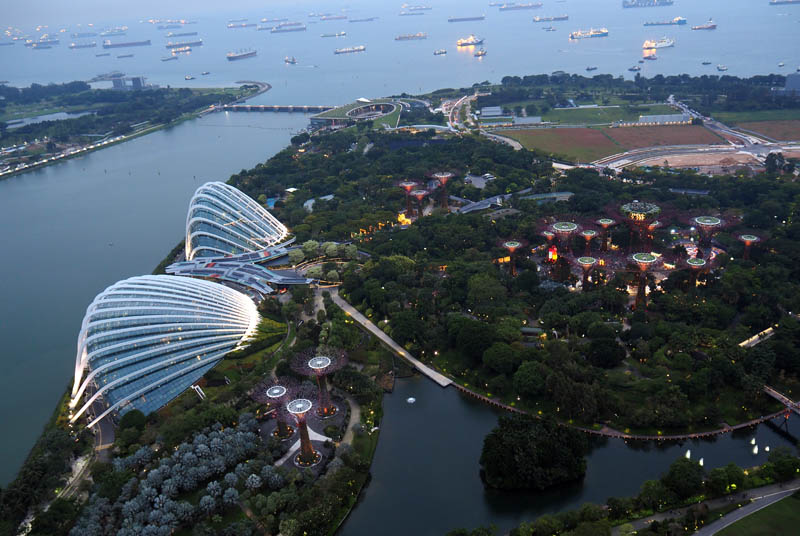
Singapore Strait from the Sands SkyPark Observation Deck
Looking east, we had a clear view of the Singapore Flyer, one of the world's tallest observation wheels, standing 165 metres above Marina Bay. From this height, it was also easy to distinguish the streets that form part of the Marina Bay Street Circuit, used annually for the Singapore Formula One Grand Prix. During our visit, preparations for the race were already well underway. Temporary grandstands had been erected alongside several sections of the circuit, safety barriers lined the roads, and maintenance teams were working on the track infrastructure in anticipation of the event scheduled for the following days. The elevated position of the SkyPark allowed us to follow long sections of the circuit as they wound around the bay and through the downtown area. Nearby, the Gardens by the Bay were also clearly visible, with the distinctive Supertrees and conservatories standing out beside the waterfront. Although we would visit it later, we left the details of the visit to this area for another day on our itinerary.

Business District from the Sands SkyPark Observation Deck
Facing south, the observation deck overlooked the waters of Marina Bay and the Singapore Strait, one of the busiest maritime corridors in the world. From the rooftop, we could clearly see dozens of cargo ships and oil tankers anchored offshore while waiting for permission to enter the Port of Singapore. The concentration of vessels illustrated Singapore's strategic importance as one of the world's leading transshipment hubs. Information panels on the observation deck explain the geography of the surrounding waters and identify nearby islands and shipping routes. Beyond the anchored vessels, visibility extended towards the southern islands and the open sea. Watching the constant movement of commercial traffic provided a clear impression of the scale of maritime activity that supports Singapore's economy and reinforces its role as a major global trading centre.
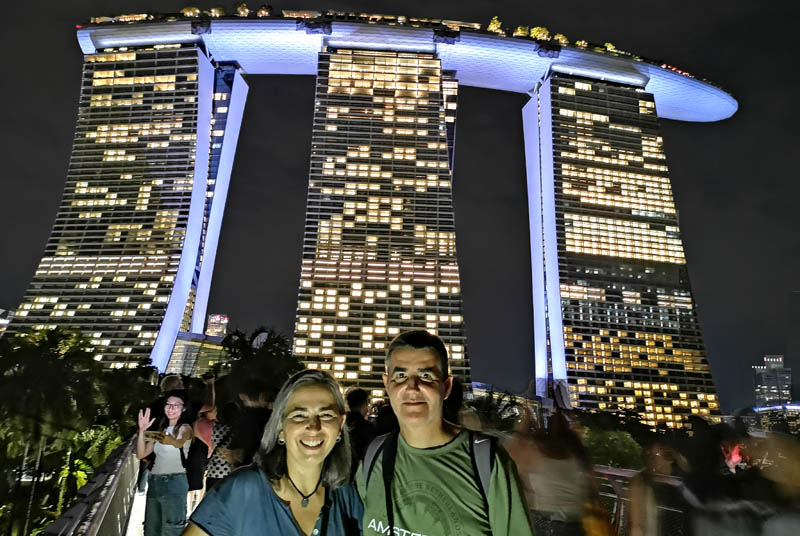
Marina Bay Sands Hotel
As the afternoon progressed, we remained on the observation deck to watch the transition from daylight to sunset. The changing light gradually transformed the appearance of the bay, while the city's buildings began to illuminate one by one. Looking towards the Central Business District, the glass façades of Singapore's financial towers reflected the final sunlight before their office lights became visible against the evening sky. The skyline includes some of the country's tallest commercial buildings, housing international banks, insurance companies, investment firms, and multinational corporations. The elevated position of the SkyPark offered a comprehensive overview of the urban layout, with the bay separating the financial district from the newer developments built on reclaimed land. As darkness fell, the illuminated skyscrapers created the familiar nighttime panorama that defines downtown Singapore.
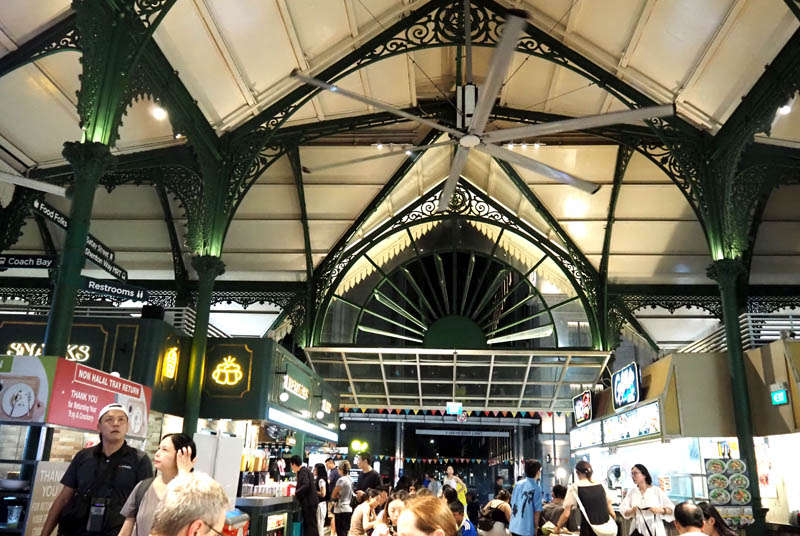
Singapore - Lau Pa Sat
After descending from Marina Bay Sands and enjoying at Gardens by the Bay the Mesmerising Garden Raphsody Show, we walked towards Lau Pa Sat, one of Singapore's oldest and most famous hawker centres. Originally constructed in the nineteenth century as Telok Ayer Market, the building was later relocated and rebuilt using its distinctive Victorian cast-iron structure, manufactured in Glasgow before being shipped to Singapore. Today, Lau Pa Sat is recognised as a National Monument and continues to operate as one of the city's principal food centres. During the evening, the adjacent Boon Tat Street is closed to traffic and transforms into an outdoor dining area, where numerous stalls prepare grilled satay and other local specialities. Inside the market, vendors offer dishes representing Chinese, Malay, Indian, and Peranakan cuisine. After choosing our meal, we found a table inside the historic market hall, bringing to an end our second day in Singapore after combining panoramic views from Marina Bay Sands with dinner in one of the city's best-known culinary landmarks.